

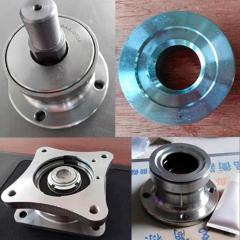
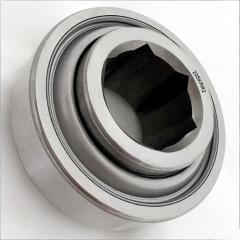

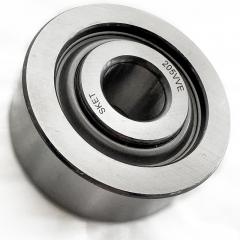

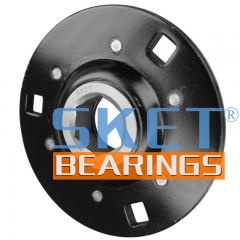
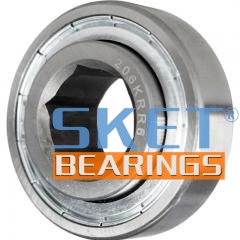
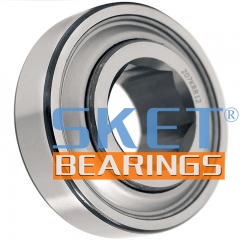
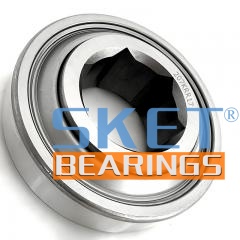
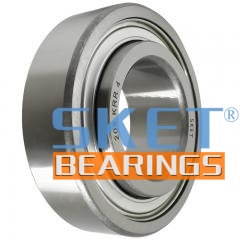
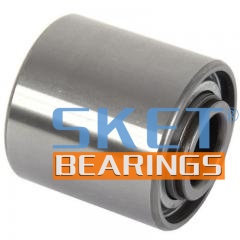
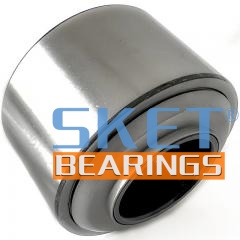
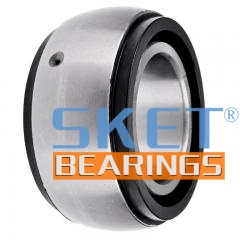
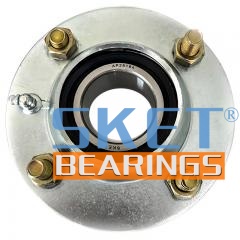

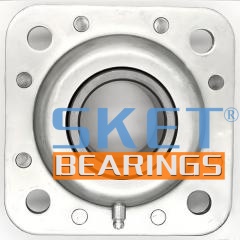
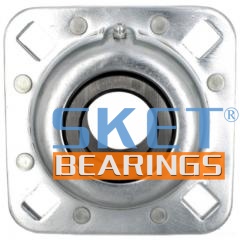

Agricultural bearings used in disc harrow equipment operating in harsh muddy field conditions
In agricultural machinery supply chains, agricultural bearing quality directly affects equipment uptime, maintenance costs, and overall operational reliability.
Equipment such as disc harrows, seeders, and tillage machines operates in environments filled with mud, dust, moisture, and continuous shock loading. Under these conditions, even small inconsistencies in sealing, lubrication, or heat treatment can lead to premature failure and costly downtime.
Executive Summary
Before purchasing or deploying agricultural bearings, distributors, importers, and OEM buyers should focus on five critical quality factors:
-
Sealing integrity is the primary determinant of field lifespan.
-
Heat treatment consistency directly affects fatigue resistance.
-
Lubrication quality influences operating temperature and wear rate.
-
Dimensional accuracy impacts fit stability and seal performance.
-
Batch traceability helps reduce supply chain risk.
A structured inspection process can significantly reduce unexpected failures and improve long-term field performance.
Why Agricultural Bearing Failure Happens in Real Field Conditions

Comparison of failed and normal agricultural bearings showing seal damage and corrosion
On paper, many agricultural bearings appear similar. However, real-world performance differences often become visible only after operation under harsh field conditions.
Most failures are not caused by design limitations but by manufacturing inconsistencies that become critical under mud, moisture, vibration, and shock loads.
Common failure scenarios include:
-
Overheating after short operation in wet soil
-
Seal failure caused by mud and pressure cycles
-
Grease contamination leading to accelerated wear
-
Unexpected breakdowns during peak farming seasons
For importers evaluating supplier quality, our guide on How to Identify Low-Quality Disc Harrow Bearings Before Importing provides additional methods for detecting hidden quality risks before purchase.
Agricultural Bearing Inspection Checklist
The following checklist can be used during incoming inspection, supplier audits, or pre-shipment verification.
| Inspection Item | Acceptable Condition | Warning Sign |
|---|---|---|
| Seal Integrity | Even contact, no deformation | Cracks, gaps, damaged lips |
| Rotation Test | Smooth and consistent rotation | Grinding or abnormal resistance |
| Lubrication | Uniform grease distribution | Leakage or contamination |
| Dimensions | Within specified tolerance | Poor fit or visible deviation |
| Surface Condition | Clean raceways and components | Rust or scratches |
| Packaging | Dry and properly sealed | Moisture exposure |
| Traceability | Batch identification available | Missing production records |
This checklist focuses primarily on incoming inspection and supplier quality evaluation. For installation-stage verification, refer to our Disc Harrow Bearing Pre-Installation Inspection Guide.
Material Traceability and Steel Consistency
Bearing performance starts with stable raw materials and consistent production processes.
| Inspection Item | What to Verify |
|---|---|
| Steel Grade | GCr15 or equivalent bearing steel |
| Traceability Code | Batch identification available |
| Material Certificate | Supplier documentation provided |
| Heat Treatment Record | Consistent across production lots |
In agricultural applications, inconsistent heat treatment is often more critical than slightly lower hardness because it directly affects bearing fatigue life under repeated impact loading.
Dimensional Accuracy and Fit Behavior
Even small dimensional deviations can create long-term instability in agricultural machinery systems.
Inspection should focus on:
-
Inner and outer diameter tolerance
-
Width consistency
-
Shaft compatibility (round, square, or hex)
-
Radial runout performance
In actual operation, even a 0.02 mm deviation may not be visible during installation but can later increase vibration, create uneven load distribution, and accelerate seal wear.
For proper replacement and compatibility evaluation, see our Disc Harrow Bearing Selection Guide.
Sealing System Performance (Most Critical Factor)
Agricultural bearing seals are often the first line of defense against mud, water, dust, and fertilizer residue.
Industry experience shows that more than 60% of agricultural bearing failures are associated with seal degradation rather than mechanical overload.
Key inspection points include:
-
Seal lip deformation
-
Uneven seal contact
-
Grease leakage
-
Visible contamination
-
Improper seal installation
Because seal failure usually develops gradually, early inspection remains one of the most effective ways to reduce field failures.
Lubrication Quality and Internal Cleanliness
Lubrication issues are rarely visible during warehouse inspection but have a major influence on field performance.
Evaluation points include:
-
Grease grade consistency
-
Filling volume uniformity
-
Contamination control
-
Thermal stability under load
Uneven grease distribution can lead to localized overheating, increased friction, and accelerated internal wear.
Rotation Smoothness and Noise Behavior
Manual rotation inspection remains one of the most effective quick evaluation methods.
Check for:
-
Smooth rotation without resistance
-
Stable torque response
-
No grinding sensation
-
Consistent feel during repeated rotation
Minor inconsistencies often indicate contamination, machining variation, or assembly defects that may become more serious during operation.
Heat Treatment Stability and Fatigue Resistance
Heat treatment consistency is more important than hardness alone.
Inspection should focus on:
-
Raceway hardness uniformity
-
Absence of overheating marks
-
Stable microstructure distribution
-
Consistent batch processing records
When hardness varies within the same production batch, bearing components may respond differently to repeated shock loads, increasing the likelihood of fatigue cracking and premature failure.
Packaging and Transportation Protection
Many agricultural bearing failures originate before installation due to improper storage or transportation.
Inspection points include:
-
Anti-rust protection
-
Moisture resistance
-
Batch traceability labeling
-
Transport shock resistance
Proper packaging becomes particularly important for export shipments where bearings may remain in storage for extended periods.
Supplier Quality System and Risk Control
Reliable agricultural bearing supply depends not only on product design but also on system-level quality control.
A professional supplier should provide:
-
Stable batch quality
-
Production traceability systems
-
Agricultural-grade sealing optimization
-
Consistent manufacturing processes
-
Pre-shipment inspection procedures
Quality control inspection of agricultural bearings in manufacturing factory using precision measurement tools
AQL Sampling Inspection Before Shipment
Random sampling remains one of the most effective methods for reducing batch risk before shipment.
| Sampling Check | Purpose |
|---|---|
| Seal Inspection | Detect leakage risk |
| Dimension Verification | Confirm fit accuracy |
| Rotation Test | Identify contamination or assembly defects |
| Grease Inspection | Verify lubrication condition |
| Packaging Check | Prevent storage-related damage |
Even small defect rates can lead to significant warranty claims and customer complaints during peak agricultural seasons.
Why Bearings Pass Inspection but Fail in the Field
A common challenge for distributors is that a bearing batch may pass warehouse inspection but still experience failures within 30–60 days of field operation.
Typical root causes include:
-
Seal degradation under mud and pressure cycles
-
Lubrication contamination introduced during production
-
Heat treatment variation between production batches
-
Continuous vibration and impact loading in field environments
This is why field performance should always be considered alongside inspection results when evaluating agricultural bearing suppliers.
How Professional Manufacturers Reduce Risk
Working with a controlled manufacturer such as SKET Bearings helps reduce operational risk through:
-
Stable batch control
-
Sealing system optimization
-
Controlled heat treatment processes
-
Consistent lubrication standards
-
Full traceability systems
This consistency helps distributors reduce failure rates, improve customer satisfaction, and lower long-term warranty costs.
Agricultural bearing manufacturer SKET Bearings production and export packaging for global distributors
FAQ
Why do agricultural bearings fail in the field?
Most failures are caused by sealing degradation, lubrication contamination, and inconsistent heat treatment.
Why do disc harrow bearings fail quickly?
Because they operate in mud, moisture, and shock-load environments that accelerate wear and seal deterioration.
How do you inspect agricultural bearings before use?
Check rotation smoothness, sealing condition, lubrication quality, dimensional accuracy, packaging condition, and noise behavior.
Can inspection fully prevent failure?
No. Inspection significantly reduces risk, but real field conditions still influence service life.
Conclusion
Agricultural bearing quality inspection is a complete risk-control process rather than a single checkpoint.
Long-term performance depends on sealing integrity, heat treatment stability, lubrication quality, dimensional accuracy, and supplier consistency.
By applying structured inspection procedures and working with reliable suppliers, distributors can significantly reduce failure rates, improve equipment reliability, and strengthen supply chain stability.