



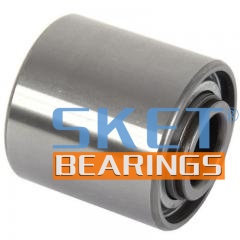
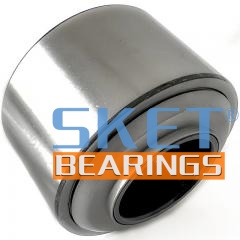
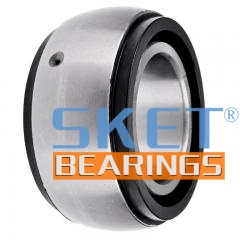
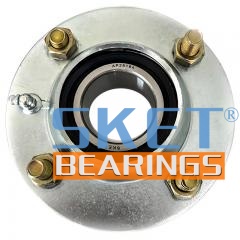
Introduction
When purchasing bearings for agricultural machinery, procurement managers and engineers face a critical decision: How does bore design influence bearing performance and operational efficiency?
In agricultural environments, where machinery operates under constant load and harsh conditions, understanding the bearing's bore design is key to ensuring optimal performance and minimizing downtime. Bore design refers to the inner diameter of the bearing, where it interfaces with the shaft. This aspect of bearing design affects load distribution, stability, and overall durability.
In this article, we'll explore how bore design impacts bearing performance in farm machinery like disc harrows, seeders, and tillers. We'll also discuss how to make better procurement decisions based on bore design, ensuring machinery longevity, efficiency, and reduced maintenance costs.
The Technical Role of Bore Design in Bearing Function
Bore Design Overview
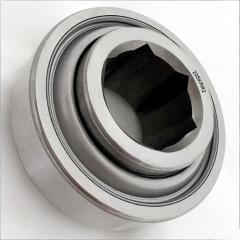
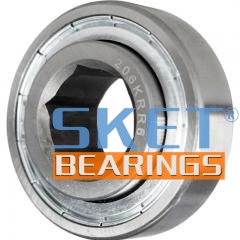
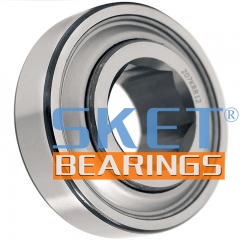
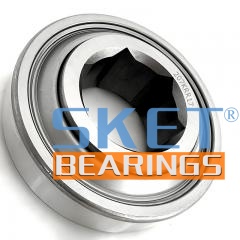
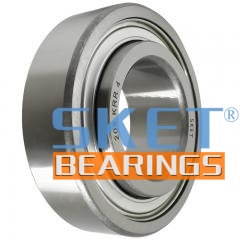
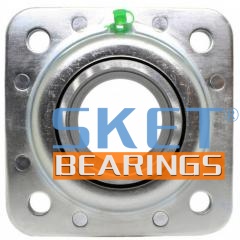
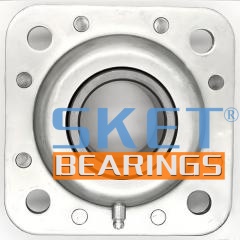
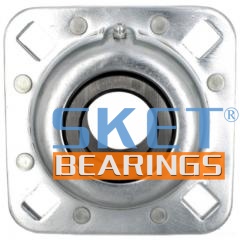
Bore design refers to the precise inner diameter of a bearing, and its accuracy is essential for ensuring proper fitment and stable performance. The main types of bore designs in agricultural bearings are Hex Bore, Round Bore, and Tapered Bore.
Each design serves specific purposes. For instance, Hex Bore Bearings are typically used in high-torque applications due to their ability to provide a secure fit, preventing slippage between the shaft and bearing during operation.
The Direct Impact of Bore Design on Bearing Performance
- Load Distribution: The bore design significantly influences how well the bearing distributes radial and axial loads. A precise bore ensures better load handling, reducing the risk of slippage and premature wear. Disc harrows, for example, encounter dynamic loading based on soil conditions and speed, which requires optimal bore fitment to maintain performance.
- Fitment Accuracy: A bearing’s fit on the shaft is crucial for proper load transfer. If the bore is too loose, it can cause slippage and early bearing failure. Conversely, a tight fit can increase friction, leading to overheating and damage. Selecting the right bore tolerance ensures that the bearing will withstand varying operating conditions without failure.
- Alignment and Stability: Proper bore design ensures that the bearing maintains alignment with the shaft, reducing vibration and ensuring stable operation. This is essential for machinery exposed to high levels of vibration, like tillers or plows, where misalignment can lead to significant wear.
Precision in Bore Design for Reduced Wear and Maintenance Costs
By ensuring a precise bore fit, you can reduce friction and wear, ultimately extending the life of the bearing and minimizing costly repairs and downtime. This is a critical factor for agricultural machinery, where uptime is essential for operational success.
Hex Bore Bearings in Agricultural Machinery
Why Hex Bore Bearings Are Often Preferred
Hex Bore Bearings are commonly selected for agricultural machinery due to their superior torque transfer capabilities and secure shaft attachment. Unlike round bore bearings, which may require locking devices, hex bore bearings are designed to remain firmly attached to the shaft, even under heavy load conditions. This makes them ideal for use in disc harrows, which experience varying forces and require stable bearing performance.
Eliminating the Need for Locking Devices
The inherent design of hex bore bearings means that locking devices are not necessary, simplifying maintenance and reducing part costs. This reduction in components improves the overall system’s reliability and reduces failure risks due to worn-out locking devices.
For example, by using hex bore bearings in disc harrows, farmers can avoid the additional step of locking device installation, saving both time and money.
Considerations for Procurement
When selecting hex bore bearings, ensure that the bore dimensions align with the shaft specifications. A proper fit will prevent misalignment, reducing maintenance costs and enhancing operational efficiency.
Bore Design and Its Role in Performance Across Different Soil Conditions
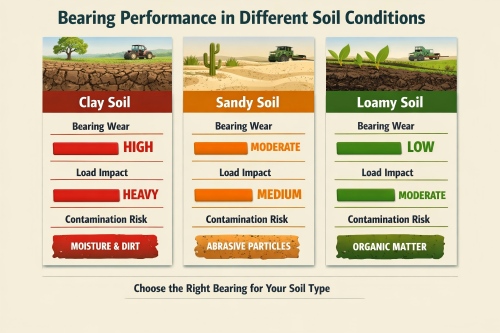
Impact of Soil Conditions on Bearing Stress and Wear
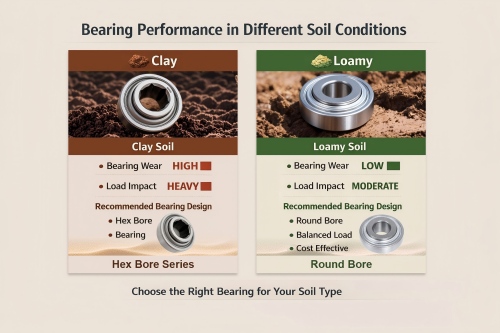
Agricultural machinery operates under a wide range of soil conditions, each of which can affect bearing performance. From soft, loamy soil to tough, clay-heavy conditions, soil types impose varying levels of friction and stress on bearings. Hex bore bearings, with their ability to securely fit onto shafts, are particularly well-suited for high-torque applications in such challenging environments.
Key Considerations for Bearing Selection Based on Soil Conditions
- Wear Resistance: Bearings must be able to endure the abrasiveness of specific soil types. A precision-designed bore, combined with the right materials, will ensure the bearing can withstand harsh conditions without excessive wear. For example, bearings exposed to rocky or clay soils must have enhanced wear resistance.
- Corrosion Resistance: Moisture and contamination in the soil, especially in coastal or humid areas, can lead to corrosion. Select bearings with bore designs that match corrosion-resistant materials to extend bearing life.
- Temperature Stability: Bearings in farm machinery may be subjected to extreme temperatures. Bore design should complement the material's ability to withstand these conditions without warping or deteriorating.
Optimizing Bearing Performance in Specific Agricultural Applications
Matching the right bore design to the soil conditions can maximize bearing performance and reduce maintenance intervals. By understanding how soil impacts bearing wear and performance, procurement managers can make more informed decisions when selecting the correct bearing for specific machinery.
Want to know more about selecting the right bearing based on soil conditions?
Practical Tips for Bearing Procurement
Determining the Right Bore Design for Specific Equipment
When procuring bearings for agricultural machinery, ensure that the bore design matches the operational demands of the equipment. Key considerations include:
- Shaft Design and Size: Verify that the bore fits precisely with the shaft to ensure stability.
- Load Capacity: Choose bearings that can handle the expected loads of the machinery under various soil conditions.
- Operational Environment: Evaluate the soil types and external conditions to determine the bearing's wear and corrosion resistance.
Quality Assurance and Sourcing from Trusted Suppliers
It's essential to source bearings from trusted suppliers like SKET Bearings, who offer detailed product specifications and certifications. Ensure the supplier provides the necessary technical support, warranties, and application-specific guidance.
Ready to make an informed bearing choice? Request a free quote or product specification sheet from our expert team today.